Fake support accounts: how crypto users get drained
On this page
Most crypto thefts do not involve hacking a blockchain. They involve persuading a person to hand over access. Fake support accounts and look-alike websites are among the most common tricks, and they work on smart people when they are stressed.
How the scam usually starts
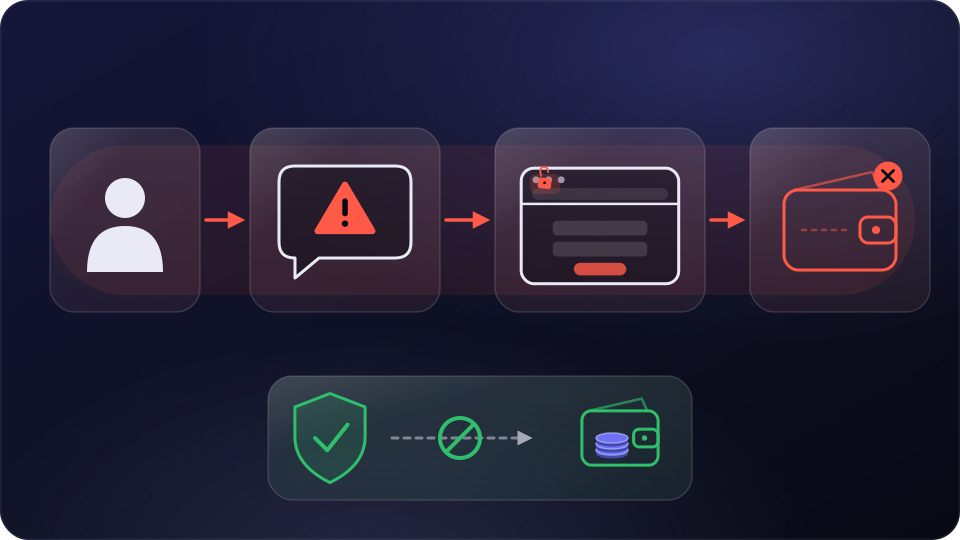
You post a question in a public group or reply to an exchange on social media: a withdrawal is stuck, a wallet will not sync. Within minutes, an account with the right logo sends you a direct message offering to help. It looks official, it is polite and it is fast.
Real support teams almost never contact you first by direct message. The speed of the reply is itself a warning sign.
What they ask for
- Your recovery phrase (12 or 24 words), presented as a way to "validate" or "sync" your wallet.
- A wallet signature or token approval on a site that looks like a real one but has a slightly different address.
- Remote access to your computer "to fix the problem".
- A small "verification" transfer that will supposedly be refunded.
No legitimate company needs any of these. Anyone who has your recovery phrase controls your funds, permanently.
Habits that protect you
- Reach support only through the link inside the official app or website you typed yourself.
- Bookmark the sites you use and open them from the bookmark, not from search ads or messages.
- Read what a wallet is asking you to sign. If you do not understand it, do not sign it.
- Turn off direct messages from strangers where the platform allows it.
- Slow down. Urgency and countdowns are part of the script.
If it already happened
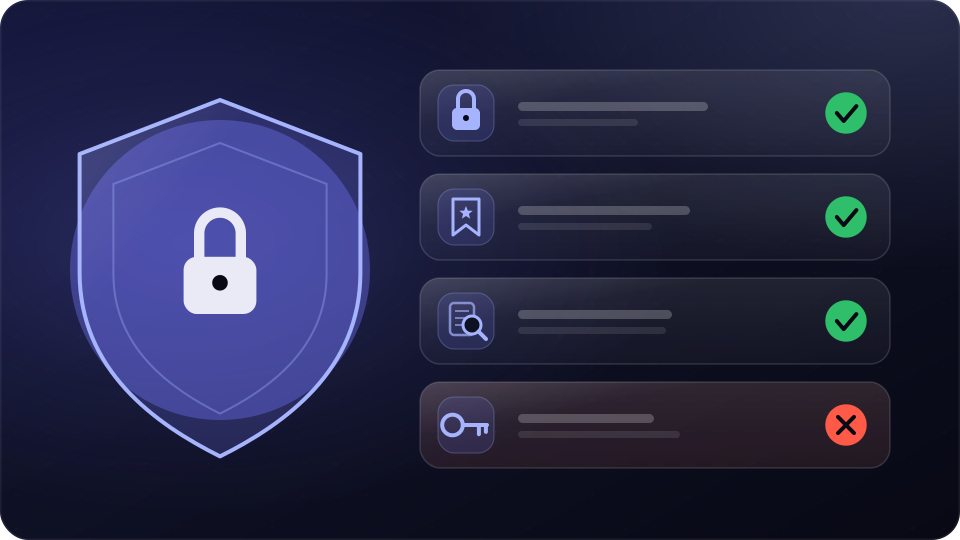
Move any remaining funds to a new wallet with a fresh recovery phrase, revoke token approvals from a trusted tool, change passwords and enable two-factor authentication on your exchange accounts. Report the account to the platform and keep a record of addresses and messages. Be careful with "recovery services" that promise to get funds back; many are a second scam.
Signs a message is fake
Look at the account before the message. Fake support profiles are often newly created, have few followers, add words like "help" or "desk" to a real brand name, or use a slightly different spelling. Their messages push you towards a link, a form or a private chat, and they rarely answer specific questions about your account.
If you are unsure, do not reply. Open the official app or website yourself, find the help section and start a new support request there. A genuine team can see your earlier request; an impostor cannot, and will usually lose interest once you move the conversation to an official channel.
For education only, not financial advice. Crypto assets are volatile and you can lose money.
Get one like this every morning
A 5-minute briefing in your inbox each weekday. Free, unsubscribe anytime.
Or follow the Telegram channel @pakaoqpMarket now
Latest news